Figuring out the right code for fitness equipment can seem tricky when you first start. Many people get confused because there are lots of different machines and accessories, and each might have a unique code. It’s like trying to sort a huge box of toys!
But don’t worry, this guide will make it simple. We’ll walk through it step by step to help you find the correct fitness equipment HS code for your needs. We’ll show you exactly how to do it so you don’t have to guess.
Key Takeaways
- Learn how Harmonized System codes work for fitness gear.
- Discover the main categories for exercise machines.
- Find out how to identify the correct code for your specific equipment.
- Understand why correct classification is important for trade.
- Get tips on where to find official HS code information.
What is a Fitness Equipment HS Code
An HS code, which stands for Harmonized System code, is a standardized way to classify traded products globally. Think of it as a product’s unique identification number for customs. The World Customs Organization created this system.
It helps countries track imports and exports and apply taxes and duties consistently. For businesses dealing with fitness equipment, knowing the right HS code is super important. It affects how your goods are processed at borders and how much you pay in taxes.
Getting it wrong can cause delays and extra costs.
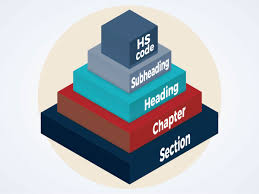
The Harmonized System uses a six-digit code, but countries often add more digits for their own specific needs. These extra digits can go up to ten digits long. The first two digits represent the chapter, the next two show the heading, and the last two indicate the subheading.
For fitness equipment, these codes help customs officials know exactly what you are sending or receiving. It’s like a universal language for trade that everyone understands.
This system helps governments gather statistics on trade. It also helps in making trade agreements and enforcing regulations. For example, if certain fitness equipment has health and safety standards, the HS code can help track it.
It ensures that only compliant products enter a country. Businesses use these codes for many things, like calculating import duties, managing inventory, and planning logistics.
The Importance of Accurate HS Coding
Accuracy in HS coding is not just a detail; it’s critical for smooth international trade. If you misclassify your fitness equipment, you could face several problems. One major issue is paying the wrong amount of import duty or tax.
This could mean paying too much and losing money, or paying too little and facing penalties later. Customs officials are trained to spot these errors.
Another problem is customs delays. When your shipment arrives, if the HS code doesn’t match the actual product, customs might hold it for inspection. This can take days or even weeks.
During this time, your goods are not moving, and you might be paying storage fees. This impacts your delivery schedule and customer satisfaction. It can really disrupt your business operations.
Furthermore, incorrect HS codes can lead to legal issues. Repeated errors might result in fines or even the seizure of your goods. For businesses, especially those importing or exporting regularly, building a reputation for accurate documentation is key.
It builds trust with customs authorities and trading partners. Using the correct fitness equipment HS code is a fundamental step for any importer or exporter.
Who Uses HS Codes
Many different people and organizations rely on HS codes. Importers and exporters use them daily to prepare customs declarations. Manufacturers might use them to understand market access and competitor pricing.
Logistics companies and freight forwarders use them to manage shipments and calculate costs. Customs brokers, who help businesses with customs procedures, need to be experts in HS codes.
Government agencies use HS codes to collect trade data, which helps them make economic policies. International organizations, like the World Trade Organization, use them to monitor trade flows. Even researchers studying global commerce rely on HS code data.
Essentially, anyone involved in the movement of goods across borders needs to understand the HS code system.
Classifying Fitness Equipment Under HS Codes
The Harmonized System has specific chapters and headings for sports goods and exercise equipment. This is where you’ll typically find the codes relevant to fitness gear. The system groups items based on their function and type.
So, treadmills will be in one area, weightlifting equipment in another, and smaller accessories perhaps in a third. Understanding these general groupings helps you narrow down your search.
The key is to look at the primary function of the equipment. Is it for cardiovascular training, strength building, or flexibility? The HS code structure is designed to capture this.
For example, machines that use “body-building” principles often fall under specific headings. Other items that offer resistance or support for exercise also have dedicated categories.
When classifying, it’s also important to consider what the equipment is made of and how it operates. While the main function is primary, material can sometimes play a role in finer distinctions within the HS code structure. However, for most common fitness equipment, the type of exercise it performs is the biggest clue to its classification.
Cardiovascular Training Equipment
This category includes machines primarily used for aerobic exercise. Think treadmills, exercise bikes, elliptical trainers, and rowing machines. These are designed to get your heart rate up and improve endurance.
The HS code for these items will usually be found under headings related to sports or exercise equipment.
Treadmills, for instance, are very common. They allow walking or running indoors. Their HS code reflects their primary use for cardiovascular fitness.
Similarly, exercise bikes mimic cycling to provide a cardio workout. Elliptical trainers offer a low-impact cardio experience, simulating stair climbing and cross-country skiing. Rowing machines engage multiple muscle groups while providing a full-body aerobic workout.
When looking up the HS code, you’ll find specific subheadings for these types of machines. The exact code will depend on the precise type of machine. For example, a stationary exercise bike might have a slightly different code than a recumbent one.
It’s the detailed description within the HS code book that helps you pinpoint the most accurate classification.
Strength Training Equipment
This group covers equipment designed to build muscle strength and endurance. It includes items like weight machines, dumbbells, barbells, and weight plates. These products work by providing resistance for the user to overcome, thereby strengthening muscles.
Weight machines often use a system of pulleys and weights to offer various resistance levels. They are designed for specific muscle groups or full-body workouts. Dumbbells and barbells are simpler but highly effective.
They consist of weights attached to a bar or handle. Weight plates are separate disks of metal that can be added to barbells or weight machines.
The HS codes for strength training equipment will typically fall under headings related to sports equipment or devices that use weights. The specific code will often distinguish between machines with built-in weights and free weights like dumbbells and barbells. The material and design can also sometimes lead to different classifications within this broad category.
Other Fitness Accessories and Equipment
Beyond the large machines, there’s a vast range of smaller fitness accessories. This includes items like yoga mats, resistance bands, jump ropes, balance boards, and foam rollers. These products are used for stretching, flexibility, core training, and recovery.
They are essential parts of many fitness routines.
Yoga mats provide cushioning and grip for practices like yoga and Pilates. Resistance bands are flexible bands that provide tension for strength exercises. Jump ropes are simple tools for cardiovascular fitness and coordination.
Balance boards challenge stability and core strength. Foam rollers are used for self-myofascial release, aiding muscle recovery.
The classification for these items can vary. Some might fall under sports equipment headings, while others might be classified based on their material or general use category if not specifically listed. For example, a yoga mat might be classified under sports goods, while a simple jump rope might be categorized differently depending on specific national tariff schedules.
It’s important to check the detailed descriptions for these smaller items.
Finding the Right HS Code
Locating the correct fitness equipment HS code requires careful examination of the Harmonized System nomenclature. Start by identifying the main function of your equipment. Is it for cardio, strength, flexibility, or something else?
Then, look for the relevant chapters and headings in the HS code book. The World Customs Organization (WCO) website is a great resource for the official HS nomenclature.
Many countries also have their own customs websites that provide national tariff schedules. These schedules will often extend the six-digit HS code to more digits, providing even greater specificity. For example, the U.S.
Harmonized Tariff Schedule (HTS) and the European Union’s TARIC system provide detailed codes. Always use the most specific code available for your product.
If you are still unsure, it is best to consult with a customs broker or the customs authority of the country you are trading with. They can provide definitive guidance. Providing a detailed description and perhaps even a product catalog can help them accurately classify your fitness equipment HS code.
Practical Examples of HS Code Classification
Let’s look at a few common fitness items and how their HS codes might be determined. This will help you see the process in action. Remember that the exact codes can vary slightly based on the country’s tariff schedule.
Example 1 Treadmill
A standard electric treadmill used for walking or running indoors. This is a piece of cardiovascular exercise equipment. Under the HS system, treadmills typically fall under Chapter 95, which covers toys, games and sports requisites.
Specifically, heading 9506 relates to articles and equipment for general physical exercise, gymnastics, athletics, other sports or outdoor games. Within this heading, there are subheadings for various types of exercise equipment. A treadmill is generally classified under a subheading like 9506.99, which often covers other articles and equipment for general physical exercise.
The specific country’s tariff might add more digits, for example, a code might look like 9506.99.9000.
Example 2 Dumbbells
A pair of adjustable dumbbells. These are used for strength training. Dumbbells are considered free weights and sports requisites.
They also fall under Chapter 95 and heading 9506. However, there is usually a more specific subheading for dumbbells and barbells. This might be found under a code that distinguishes between weights and weightlifting belts.
An example code could be 9506.11, for dumbbells and barbells. Again, national tariffs will extend this code, perhaps to 9506.11.0000.
Example 3 Yoga Mat
A standard yoga mat made of rubber or foam. This is used for yoga and other floor exercises. The classification can sometimes depend on the primary material and intended use.
If it’s primarily for sports and exercise, it might fall under heading 9506. However, if the material is the defining characteristic, it could potentially be classified under headings related to plastic or rubber articles (Chapter 39 or 40), depending on how it’s presented and what the customs authority prioritizes. Often, items specifically designed for sports and exercise are kept within Chapter 95.
A code could be like 9506.99, similar to other general exercise equipment, or a specific code if available for mats and pads for yoga and gymnastics. It is essential to check the specific descriptions for ‘mats’ within the relevant chapter.
Navigating Trade and Customs with HS Codes
Understanding the correct fitness equipment HS code is the first step in international trade. Once you have the right code, you can proceed with confidence. This code is what you will use on all your shipping documents.
It tells customs officials exactly what product you are importing or exporting.
When you fill out your customs declaration forms, the HS code is a mandatory field. It directly influences the duties and taxes that will be applied to your shipment. Different HS codes carry different tariff rates.
Some equipment might be subject to higher duties, while others might be lower or even duty-free under certain trade agreements.
The HS code also helps customs authorities in screening shipments. They use these codes to identify goods that may require special permits, licenses, or inspections. For instance, if certain fitness equipment is subject to safety standards, the HS code helps ensure compliance.
This is why accuracy is so vital; it prevents your goods from being held up or rejected.
Import Duties and Taxes
The HS code is the primary factor determining the amount of import duty and taxes you will pay. Each country has its own tariff schedule, which lists the duty rates associated with each HS code. These rates can vary significantly.
Some countries may have preferential trade agreements that reduce or eliminate duties on certain goods from specific partner countries.
For example, a country might impose a 10% duty on imported treadmills under a certain HS code. However, if the treadmill is imported from a country with which it has a free trade agreement, the duty might be 0%. Similarly, value-added tax (VAT) or goods and services tax (GST) will be calculated based on the imported value of the goods, often with the duty already included.
Knowing your fitness equipment HS code helps you accurately estimate these costs before you even ship the product.
This financial predictability is crucial for business planning. It allows you to set competitive prices for your products and forecast your profit margins accurately. Without an accurate HS code, you’re essentially guessing at your costs, which can lead to unexpected financial burdens.
Customs Clearance Procedures
The process of clearing customs relies heavily on the correct HS code. When your shipment arrives at the border, customs officials will examine the documentation. The HS code on your invoice, bill of lading, and customs declaration must all match and correspond to the actual goods.
This consistency is key to a smooth clearance.
If the HS code is incorrect, the customs authority may request additional information or physical inspection of the goods. They might reclassify the item themselves, which could result in higher duties being charged retroactively. This can cause significant delays and incur additional handling or storage fees.
In some cases, if the misclassification is deemed intentional or fraudulent, it can lead to penalties or even the seizure of the goods.
To facilitate a quick customs clearance, it’s beneficial to provide a detailed commercial invoice that clearly states the HS code, description of goods, quantity, and value. Providing any necessary certificates or compliance documents alongside the correct HS code further streamlines the process. Many businesses work with customs brokers who specialize in ensuring all documentation is accurate and compliant.
Global Trade Data and Statistics
HS codes are the backbone of global trade statistics. Customs authorities worldwide report trade data based on these codes. This data is then compiled by international organizations like the United Nations, the World Trade Organization, and the World Customs Organization.
This information is vital for economic analysis, policy-making, and market research.
For businesses, this data can provide valuable insights. By analyzing trade statistics for fitness equipment HS codes, you can identify emerging markets, track import/export trends, and understand global demand. For example, you might see a significant increase in imports of a particular type of exercise bike in a specific country, indicating a growing market opportunity.
This kind of intelligence can inform your business strategy and help you make informed decisions about where to source or sell your products.
This global transparency helps create a more predictable trade environment. It allows governments to monitor trade flows, identify potential trade imbalances, and negotiate trade agreements more effectively. The consistent use of HS codes ensures that trade data from different countries can be compared and analyzed meaningfully.
Common Myths Debunked
Myth 1 The HS code for fitness equipment is always six digits long
Reality: The Harmonized System itself is based on a six-digit code. However, individual countries extend this code to eight, ten, or even more digits for their national tariff and statistical purposes. When importing or exporting, you must use the specific national code for the country you are trading with, not just the generic six-digit code.
Myth 2 Any code within Chapter 95 will work for fitness equipment
Reality: Chapter 95 covers a broad range of items, including toys, games, and sports requisites. While most fitness equipment falls under this chapter, using just any code within it is incorrect. You need to find the specific heading and subheading that accurately describes your fitness equipment, such as ‘articles and equipment for general physical exercise’ rather than, for example, ‘inflatable swimming pools’ which are also in Chapter 95.
Myth 3 My supplier will always provide the correct HS code
Reality: While suppliers can be helpful, the ultimate responsibility for correct HS code classification lies with the importer or exporter. Suppliers may not always be aware of the specific requirements or nuances of the destination country’s tariff schedule. It’s always best practice to verify the HS code yourself or work with a customs broker to ensure accuracy.
Myth 4 If I guess an HS code, customs will just correct it for me
Reality: Customs authorities are unlikely to ‘correct’ an incorrect HS code for you without consequences. Misclassification can lead to delays, penalties, or demands for backdated duties. They will typically treat it as a documentation error that requires resolution, which can be costly and time-consuming.
Proactive verification is far better than reactive correction.
Frequently Asked Questions
Question: What is the primary chapter for fitness equipment in the HS code system
Answer: The primary chapter for most fitness equipment in the Harmonized System is Chapter 95, which covers toys, games, and sports requisites.
Question: Do I need an HS code for every single fitness accessory
Answer: Yes, every item being traded internationally needs an HS code for customs purposes. This includes small accessories like resistance bands or jump ropes.
Question: Can the same fitness equipment have different HS codes
Answer: The core six-digit HS code is generally standardized. However, national tariff schedules extend these codes, and slight variations in features or intended use might lead to different extended codes in different countries.
Question: How do I find the correct HS code if my equipment is not standard
Answer: For non-standard equipment, carefully read the descriptions of headings and subheadings, consider the primary function, materials, and how it is used. If still in doubt, consult the customs authority of the importing country or a customs broker.
Question: Are there any online tools to help find HS codes
Answer: Yes, many national customs websites offer searchable databases of their tariff schedules. The World Customs Organization website also provides the HS nomenclature, which is a good starting point.
Summary
Finding the right fitness equipment HS code helps your shipments move smoothly. It ensures you pay the correct taxes and avoids customs problems. Always use the most specific code for your product and country.
Verify this code carefully before you ship.